

Marijuana Blog
How to Decarb Weed: Temperature, Time and Why It Matters
Sep
Decarbing weed means heating it at 110 C (230 F) for 30 to 40 minutes before you cook with it. Skip that step and your edibles will do almost nothing, no matter how carefully you infuse afterwards. This guide covers what the reaction actually is, the temperature and time to use, how to do it in an oven, which method is best, and what happens when you push it too far.
Key Takeaways
- Decarb at 110 C (230 F) for 30 to 40 minutes. That is the setting that converts the most THCA with the least terpene loss.
- Raw cannabis contains THCA, not THC. THCA is not intoxicating when eaten, which is why raw flower in a brownie mix does nothing.
- Break the flower up, do not grind it to powder. Powder scorches at the edges and passes through your strainer later.
- A mason jar in the oven is the best method for most people. Less smell, more consistent, and it needs no new equipment.
- Past about 140 C (285 F) you start losing terpenes and converting THC into CBN, so hotter is not faster in any useful sense.
What Is Decarboxylation?
Decarboxylation is a chemical reaction in which a molecule loses a carboxyl group and releases it as carbon dioxide. In cannabis, that molecule is a cannabinoid acid. THCA loses its carboxyl group under heat and becomes THC. CBDA becomes CBD in the same way. That single change is what turns raw plant material into something that produces an effect when eaten.
Living and freshly cured cannabis holds almost all of its cannabinoids in the acid form. THCA does not bind to the body’s cannabinoid receptors the way THC does, so eating raw flower, or stirring it into a batter, gives you very little. A small amount of THCA converts slowly at room temperature as flower ages, which is why very old cannabis can feel different, but the amount is not enough to build a recipe on.
When you smoke or vaporize, decarboxylation happens instantly at the point of combustion. Cooking has no equivalent moment, so it has to be done deliberately, in an oven, before the cannabis ever touches fat.
Why Do You Have to Decarb Weed Before Making Edibles?
Because infusion temperatures are too low and too brief to do the job on their own. A stovetop infusion sits at 70 to 90 C (160 to 195 F) for two to three hours, which converts only a fraction of the THCA present. Most of the potency you paid for stays locked in acid form and gets strained out with the plant material.
This is the single most common reason homemade edibles disappoint. People blame the strain, the ratio, or the infusion time, when the actual failure happened in the first half hour, in an oven that was never turned on.
It matters for dosing too. If you are working out milligrams per serving, that calculation assumes the THCA converted. An incomplete decarb makes every number downstream wrong, and wrong in a direction you cannot see until you have eaten it. Homemade edibles are not bound by the 10 mg of THC per container limit that applies to legal packaged edibles in Canada, so a home batch can land anywhere, and getting the first step right is what makes the rest of the arithmetic mean anything.
What Temperature Should You Decarb Weed At?
110 C, which is 230 F. Set the oven, let it come fully up to heat, and give it 30 to 40 minutes.
Research on cannabinoid decarboxylation has found that THCA conversion at around 110 C runs as a clean and near complete transformation, and that THCA specifically favours a shorter time at a higher temperature rather than a long slow bake, which is the opposite of what CBDA prefers (Filer, Cannabis and Cannabinoid Research, 2022).
Three settings that work, all for dried flower spread in a single layer:
| Approach | Temperature | Time | Trade-off |
|---|---|---|---|
| Standard | 110 C (230 F) | 30 to 40 min | The best balance. Near complete conversion, most terpenes retained. Use this unless you have a reason not to. |
| Low and slow | 100 C (212 F) | 60 to 90 min | Gentlest on terpenes and smell. Slow, and easy to under-do if your oven runs cool. |
| Hot and fast | 120 C (250 F) | 20 to 25 min | Quickest. Also the easiest to overshoot, and overshooting costs both flavour and potency. |
Two things move these numbers more than people expect. Home ovens are frequently out by 10 to 15 degrees, and most of them cycle rather than holding a flat temperature, so an oven thermometer is worth more here than any other piece of equipment. And material that is not fully dry spends the first stretch of the bake driving off water rather than converting anything.
How Long Does It Take for THCA to Decarboxylate?
At 110 C, 30 to 40 minutes for dried flower broken into pieces. At 100 C it takes 60 to 90 minutes. At 120 C, 20 to 25 minutes.
Four things change where you land in those ranges. Piece size matters most: whole dense buds insulate their own centres, so break them up. Tray depth is next, since a heaped pile decarbs unevenly and a single layer does not. Oven accuracy is the one nobody checks. And starting moisture sets how much of the bake is spent drying rather than converting, which is why recently cured flower can need the longer end of the range.
Going well past the time does not add potency. Once the THCA is converted there is nothing left to convert, and continued heat only degrades what you made.
How Do You Decarb Weed in the Oven?
- Set the oven to 110 C (230 F) and let it reach temperature properly. Ten minutes past the beep is not wasted time.
- Break the flower apart by hand into rough, pea-sized pieces. Do not use a grinder. Powder scorches at the edges and slips through the strainer when you infuse.
- Spread it in a single layer on a baking sheet lined with parchment. Nothing should be stacked on anything else.
- Bake 30 to 40 minutes. Give the tray a gentle shake halfway through so the pieces underneath get their turn.
- Take it out when the colour has shifted from green to a light golden brown and the flower crumbles easily between your fingers.
- Let it cool on the tray before you touch it. Cannabis is brittle while hot and you will lose material to dust if you handle it early.
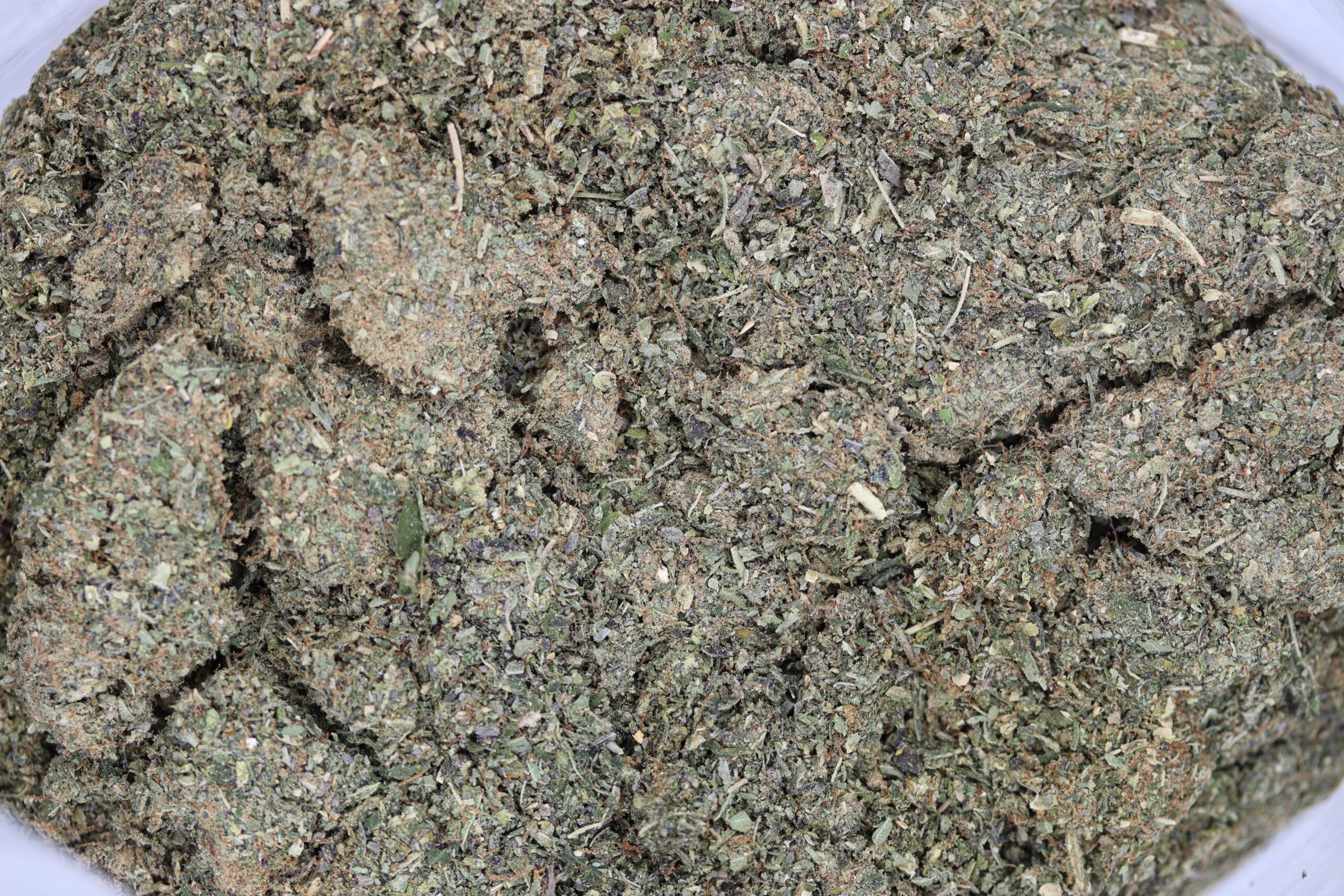
If you are starting from shake rather than whole buds, you can skip the breaking-up step entirely. Shake is already the right size, it decarbs more evenly than buds do, and it costs a fraction of the price for a use where appearance is irrelevant.
What Is the Best Method to Decarboxylate?
A mason jar in the oven, for most people. Same temperature and time as an open tray, but the flower goes into a sealed jar first. The jar traps the smell, holds moisture and volatile terpenes in rather than letting them escape, and evens out the heat so the edges do not run ahead of the middle. It costs nothing beyond a jar you probably own.
| Method | Smell | Consistency | Effort | Extra cost |
|---|---|---|---|---|
| Open tray in the oven | High | Fine with a thermometer | Low | None |
| Mason jar in the oven | Much lower | Better, more even | Low | A jar |
| Sous vide | Almost none | Best, the bath holds an exact temperature | Medium | A circulator |
| Dedicated decarb device | Lowest | Best, fixed cycle | Lowest | Roughly $100 to $250 |
Sous vide is genuinely the most accurate option, because water cannot exceed its boiling point and the bath does not cycle the way an oven element does. If you already own a circulator, seal the flower in a bag and hold it at 95 C for about 90 minutes. If you do not own one, this is not a reason to buy one. A dedicated device only earns its place if you are infusing often enough that the smell and the setup time have become the annoying part.
Do You Need to Decarb Kief, Hash and Concentrates?
Kief and dry sift, yes. They are still raw plant material in acid form, just far more concentrated. They also decarb faster and burn more easily, so drop to about 20 to 25 minutes at 110 C and watch them.
Hash also needs decarbing, and it behaves differently once warm because it melts rather than crumbling. Break it into small pieces on parchment and expect it to spread.
Distillate and most vape-cart oils are the exception. They are usually decarbed already during processing, which is why they can be added straight to a recipe without an oven step. If a product does not state it, assume it is not.
How Do You Know When Weed Is Decarbed?
Three signals, in order of reliability. Colour shifts from green to a light golden or toasted brown. Texture becomes dry and brittle, crumbling under light pressure instead of squashing. Smell becomes noticeably stronger and more toasted partway through the bake, then settles.
What you are looking for is toasted, not scorched. Dark brown or black edges mean the temperature was too high or the pieces were too fine, and that material has lost potency rather than gained it.
What Happens If You Decarb Too Long or Too Hot?
Two things, and both are losses. Terpenes are volatile and start evaporating well below the temperatures that damage cannabinoids, so an aggressive bake strips the aroma and flavour first. Past roughly 140 C (285 F), THC begins converting into CBN, a different cannabinoid entirely, and any THC that has taken that path is no longer THC.
There is no upside to overshooting. The reaction finishes when it finishes, and every extra minute past that point is spent taking things away.
Frequently Asked Questions
What is the best method to decarboxylate?
A mason jar in the oven at 110 C for 30 to 40 minutes. It costs nothing extra, traps most of the smell, and heats more evenly than an open tray. Sous vide is more accurate still if you already own a circulator, and a dedicated decarb device is worth it only if you infuse regularly.
How long does it take for THCA to decarboxylate?
Roughly 30 to 40 minutes at 110 C (230 F) for dried flower broken into small pieces. Allow 60 to 90 minutes at 100 C, or 20 to 25 minutes at 120 C. Piece size, tray depth, oven accuracy and starting moisture all shift where you land in that range.
Is decarboxylation necessary for edibles?
Yes. Raw cannabis contains THCA, which is not intoxicating when eaten, and infusion temperatures are too low to convert much of it. Without a decarb step most of the potency stays locked in acid form and gets strained out with the plant material.
Can you decarb weed in an air fryer?
You can, but it is harder to control. Air fryers run hot, cycle aggressively and move air fast, which dries and scorches small pieces quickly. If you use one, set it 10 degrees lower than you would an oven, check at 20 minutes, and expect more terpene loss.
Does decarbing weed smell?
Strongly, yes, and the smell builds through the bake. Sealing the flower in a mason jar cuts most of it. An open window and a fan handle the rest. This is the main practical reason people move to a jar or a sealed device.
Can you decarb weed that has already been dried and cured?
That is exactly what you should be decarbing. Curing removes moisture but does almost nothing to convert THCA into THC. Cured flower simply needs less of the bake spent driving off water, so it tends to sit at the shorter end of the time range.
Do you need to decarb weed before making cannabutter?
Yes, and it is the step that decides whether the batch works. Decarb first at 110 C for 30 to 40 minutes, then infuse. Our guide to making cannabutter covers the ratios and the potency math once your flower is activated.
What to Do Next
Decarbing is step one. Step two is moving those cannabinoids into a fat, which is where cannabutter and infused coconut oil come in. If you would rather skip both steps, our ready made cannabutter arrives already infused with a stated THC figure, and the wider edibles range covers everything else. For flower chosen specifically for infusion, start with cannabis flower or the cheaper shake.