

CBD
Crumble vs. Budder: Textures and Uses
Jul
The landscape of cannabis extraction in 2026 has become incredibly diverse, moving far beyond the simple oils and waxes of the past. Among the most popular textures currently sought after at Canada Bliss Herbals are crumble and budder.
While these two cannabis concentrates often share similar chemical potency, their physical structures offer vastly different experiences in terms of handling, shelf stability, and flavour delivery. Choosing between a dry, honeycomb-like crumble and a smooth, whipped budder is often a matter of personal ritual and hardware preference.
This guide will dismantle the technical differences between these two extracts, explaining how post-extraction processing creates their unique identities and how you can determine which consistency is right for your next session.
Key Takeaways
- Texture Origins: Both are typically BHO (Butane Hash Oil) products, but budder is whipped with heat, while crumble is purged at lower temperatures for longer periods.
- Handling: Crumble is dry and easy to sprinkle, making it ideal for topping flower. Budder is creamy and requires a dab tool, perfect for dedicated dab rigs.
- Potency: Both concentrates are heavy hitters, generally ranging between 60% and 85% THC, depending on the starting genetics.
- Flavour Profile: Budder often retains a slightly higher terpene moisture content, while crumble offers a cleaner, more subtle aromatic experience due to its dryness.
What Is Cannabis Crumble? Texture and Production Explained
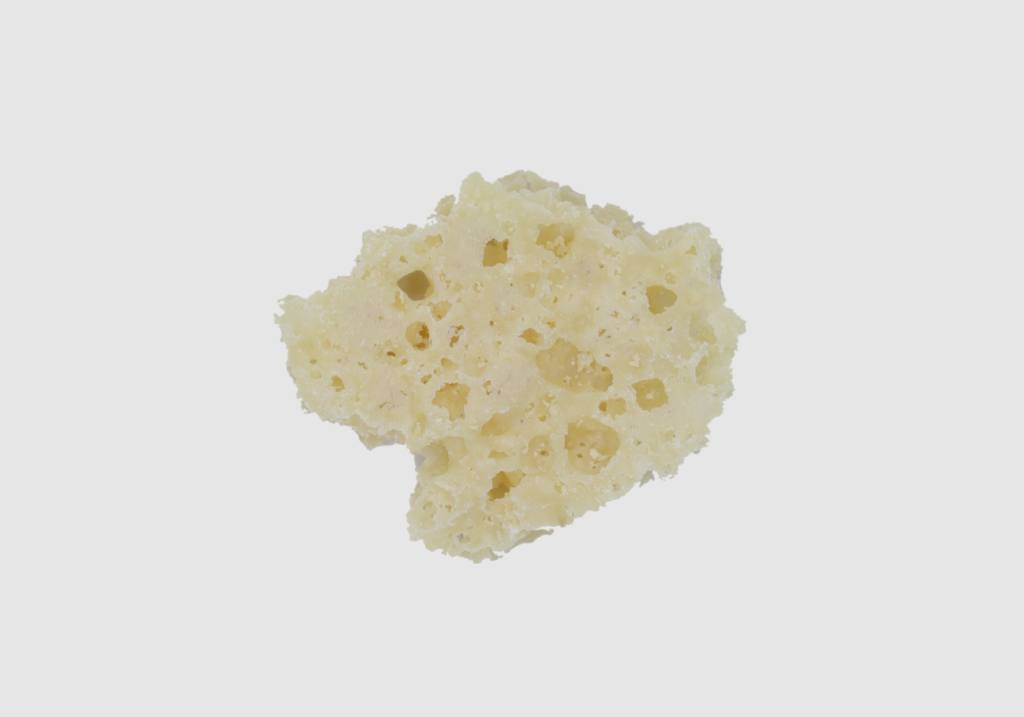
Crumble is unique in the world of extracts because of its aerated and dry appearance. Often resembling a yellow honeycomb or a piece of dry feta cheese, crumble is prized by users who find other waxes too sticky or difficult to manage. Because it is not a viscous liquid, you can often handle it with your fingers if necessary, though a tool is always recommended to preserve purity.
The production of crumble involves a specialized purging process. After the initial hydrocarbon extraction, the oil is placed in a vacuum oven.
To achieve the crumble texture, the extract is purged at a relatively low temperature for an extended period. This slow removal of solvents, combined with slight agitation, allows the oil to thicken and trap tiny air pockets.The result is a brittle, stable concentrate that crumbles under the slightest pressure, hence the name.
Understanding Cannabis Budder: The Creamy Alternative
Budder represents the middle ground of concentrate textures. It is not as solid as shatter, nor as liquid as sauce. Instead, it possesses a consistency similar to room-temperature butter or cake frosting. This makes it incredibly popular for dabbing, as it clings to a dab tool easily and melts almost instantly when it touches a hot quartz banger.
The budder consistency is achieved through a process of whipping. After the cannabinoids are extracted, the oil is placed on a heating plate and whipped vigorously. This introduction of air, combined with the heat, causes the cannabinoids to nucleate and crystallize into a creamy, opaque mass.
Because the process is faster and uses slightly more heat than crumble production, it creates a more homogenous mixture where the terpenes are evenly distributed throughout the butter.
Side-by-Side Analysis: Crumble vs. Budder
To help you decide which texture fits your lifestyle, the following table breaks down the essential characteristics of each extract.
| Characteristic | Cannabis Crumble | Cannabis Budder |
| Consistency | Dry, brittle, honeycomb-like | Creamy, smooth, frosting-like |
| Ease of Use | High (can be sprinkled or dabbed) | Moderate (requires a dab tool) |
| Stability | Very High (rarely changes texture) | Moderate (can dry out over time) |
| Best Use Case | Topping bowls or joints | Dedicated dabbing / E-nails |
| Terpene Retention | Moderate | High |
| Aesthetics | Matte, yellow to orange | Lustrous, pale gold to amber |
The Science of Post-Processing: Why Texture Matters
The reason these textures exist is not just for visual variety; it affects how the concentrate performs during consumption. For instance, the high surface area of crumble means that when it is added to a bowl of flower, it vaporizes evenly alongside the plant material. This makes it the utility player of the cannabis world. You do not need an expensive glass rig to enjoy crumble; you can simply add a few crumbs to your pipe and significantly boost your THC intake.
Budder, on the other hand, is designed for precision. Because of its moisture content and whipped nature, it provides a very smooth hit. The terpenes (the flavour molecules) are emulsified within the cannabinoid wax, meaning the first puff tastes just as vibrant as the last.
For the connoisseur who values the mouthfeel of the vapour and the immediate burst of strain-specific flavour, budder is almost always the superior choice.
Choosing the Right Concentrate for Your Experience Level
If you are a beginner transitioning from flower to extracts, crumble is often the recommended starting point. Its dry nature means it will not get stuck to your fingers, your table, or your tools. It is also more forgiving in terms of temperature; if your dab nail is a little too hot or a little too cold, crumble still tends to vaporize effectively without leaving behind a sticky residue that is difficult to clean.
For the seasoned dabber, budder offers a more refined experience. Its malleability allows for micro-dabbing-the ability to take a tiny, precise sliver of wax for a mild effect, or a larger glob for a heavy evening session.
Budder also tends to stay fresh longer if stored correctly, as the whipped structure protects the inner cannabinoids from oxidation better than the porous, air-filled structure of crumble.
Methods of Consumption: Dabbing, Vaping, and Topping
The versatility of these two products is one of their greatest strengths. While dabbing remains the most common method, the 2026 market has seen a rise in portable consumption. Many electronic vaporizers (wax pens) are specifically designed for these textures.
Crumble is particularly great for coiled pens, as the dry pieces can be dropped directly onto the heating element without creating a liquid mess that might leak into the battery.
If you prefer a more traditional experience, both concentrates can be used to fortify your flower. Simply rolling a snake of budder inside a joint or sprinkling crumble over a pipe bowl can transform a standard session into a long-lasting, high-potency experience.
This is often referred to as enhancing the flower, and it allows for a more controlled transition into the world of concentrates.
Safety, Dosage, and Storage Best Practices
Because both crumble and budder are highly concentrated, the start-low-go-slow rule is more important than ever. A piece of crumble the size of a pinhead can contain as much THC as an entire half-gram joint.
For new users, this can lead to an overwhelming experience if not handled with care. We recommend starting with a dose no larger than a grain of salt and waiting at least 15 minutes to feel the full onset of effects before considering more.
Storage is also a vital component of the concentrate experience. Crumble is naturally shelf-stable, but it can become dusty if left in a dry environment. Budder is more sensitive; if exposed to too much heat, it can melt and lose its whipped consistency, eventually turning into a harder wax.
To preserve the quality of your purchase from Canada Bliss Herbals, always keep your jars in a cool, dark place. A silicone or glass jar with an airtight lid is the best way to ensure your budder stays creamy and your crumble stays potent.
Why Canada Bliss Herbals Is the Preferred Source for Cannabis Concentrates
At Canada Bliss Herbals, we treat cannabis extraction as a craft. We source our crumble and budder from producers who use closed-loop extraction systems, ensuring that all solvents are completely purged and only the pure essence of the plant remains.
Our selection is curated to include a wide variety of indica, sativa, and hybrid profiles, allowing you to choose a concentrate that matches your specific preferences.
Furthermore, we provide detailed lab results for every batch, so you know exactly what you are consuming. Whether you are looking for a high-potency crumble for your weekend adventures or a flavourful budder for a relaxing evening at home, our online shop offers discreet, rapid shipping across Canada.
Plus, with our rewards program, every gram you purchase helps you save on your next exploration. Browse our full range of hash, live hash rosin, and other premium extracts alongside our edibles collection.
Crumble or Budder: Picking the Right Texture for Your Cannabis Sessions
Ultimately, the choice between crumble and budder comes down to how you like to consume. If you value ease of use, versatility, and the ability to enhance your flower, crumble is a fantastic, stable addition to your kit.
If you are a flavour-first consumer who enjoys the ritual of dabbing and the smooth, creamy vapour of a whipped extract, budder will likely become your new favourite.
Frequently Asked Questions (FAQ)
Q: Is crumble more potent than budder?
A: Not necessarily. Potency is determined by the quality of the starting flower and the efficiency of the extraction. While crumble can sometimes reach higher THC percentages because it is so dry, both typically fall within the same 60% to 85% range.
Q: Can I turn my crumble into budder?
A: It is difficult to do at home. Budder requires specific heat and whipping during the purging phase. Once crumble has been fully purged and dried, it has lost the moisture and malleability required to become a creamy budder.
Q: Does budder have more flavour?
A: Often, yes. Because budder is whipped and retains a slightly higher amount of moisture and terpenes within its creamy matrix, the flavour can be more pronounced and bright compared to the drier, more subtle profile of crumble.
Q: Why is my budder turning hard and white?
A: This is a natural process called nucleation. Over time, the THC molecules begin to separate from the terpenes and crystallize. While it may look different and become harder to handle, the potency remains the same. You can still dab it safely.
Q: What temperature is best for dabbing these?
A: For both concentrates, a low-temp dab is best for flavour. Aim for a temperature between 260°C and 315°C (500°F–600°F). If the nail is too hot, you will scorch the terpenes and create a harsh, burnt taste.