

Marijuana Blog
How to Make Cannabutter: A Complete Canadian Guide
Aug
Cannabutter is the base ingredient behind almost every homemade edible, and making it well comes down to three numbers: the temperature you decarb at, the ratio of flower to butter, and how many milligrams end up in a teaspoon. Get those right and everything else is technique. This guide covers all three, plus three methods, straining, storage, and how to work out the dose in your finished batch.
Key Takeaways
- Decarb first at 110 C (230 F) for 30 to 40 minutes. Skipping this step is the single most common reason homemade edibles do nothing.
- The standard ratio is 7 g of flower to 1 cup (227 g) of butter, which lands around 18 mg of THC per teaspoon at 20% flower.
- Keep the butter below 160 C (320 F) during infusion. Above that you start burning off what you just activated.
- Homemade cannabutter is far stronger per serving than a legal packaged edible, which is capped at 10 mg of THC per container in Canada.
- Finished cannabutter keeps three to four weeks in the fridge and up to six months in the freezer.
What Is Cannabutter?
Cannabutter is butter that has been infused with cannabis. You will also see it called weed butter, canna-butter, cannabis butter or THC butter, and all of those describe the same thing. The reason butter works as a carrier is that THC and CBD are fat soluble, not water soluble. They bind readily to the fat molecules in dairy butter and stay there, which is what lets you measure, portion and cook with them.
That is also why you cannot make a functional edible by stirring ground flower into a batter. The cannabinoids need a fat to move into, and they need heat applied first to become active in the first place.
What You Need Before You Start
The ingredient list is short. One cup (227 g) of unsalted butter, 7 to 14 g of cannabis, and a cup of water if you are using the stovetop method. The water keeps the temperature stable and pulls some of the plant material out at the end.
For equipment you need a baking sheet, parchment paper, a saucepan or slow cooker, a fine mesh strainer or cheesecloth, and a storage container with a tight lid. A kitchen thermometer is not strictly required but it is the difference between a repeatable result and a guess.
Your starting material matters more than most guides admit:
- Flower gives the cleanest flavour and the most predictable potency, because you know the percentage on the label. Browse cannabis flower if you are choosing something specifically for infusion.
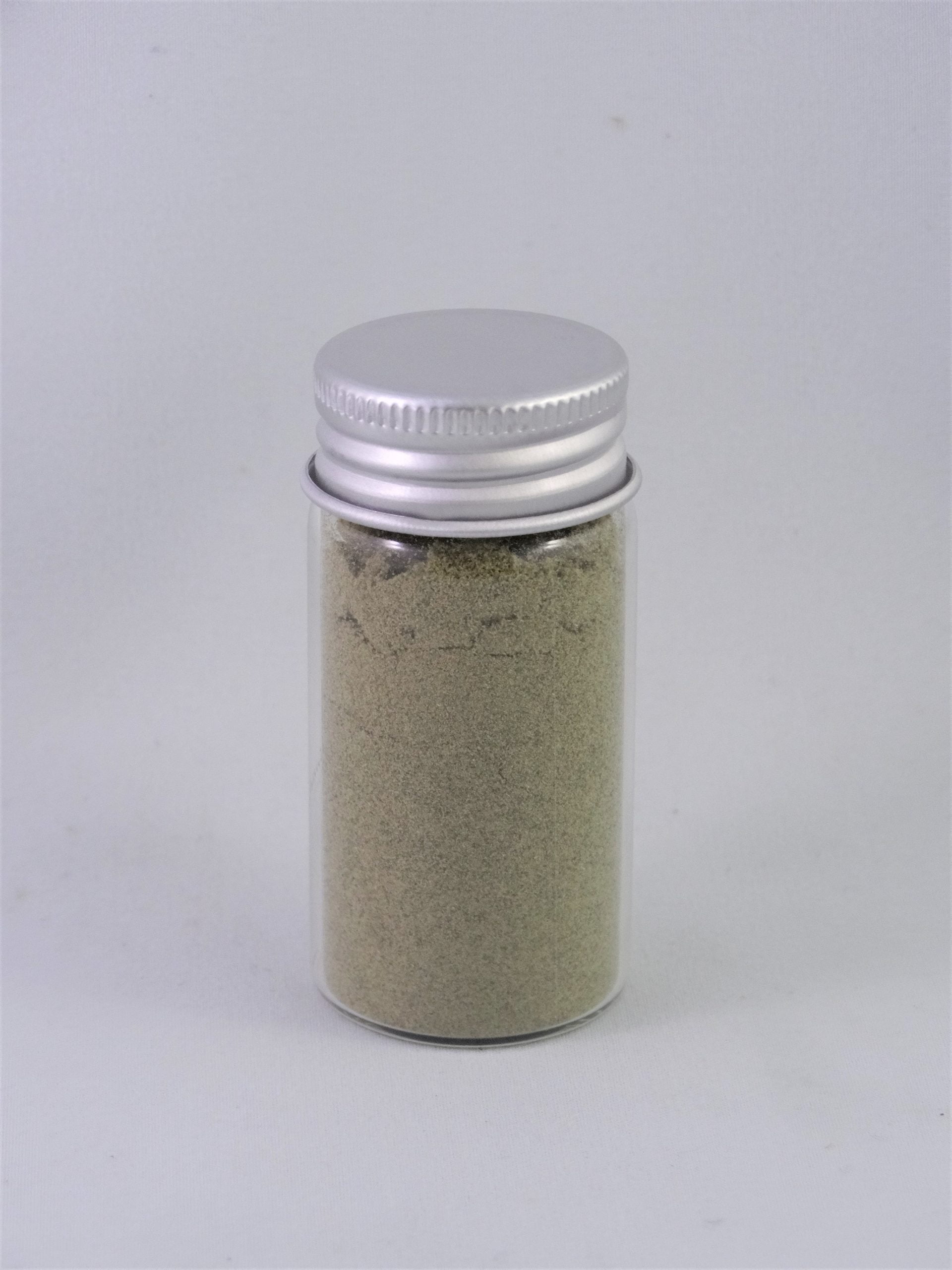
- Shake and kief are the value option. Shake is the smaller pieces left at the bottom, and it infuses just as well as full buds for a fraction of the cost. Kief is far more concentrated, so cut your quantity substantially. Both are in the shake and kief category.
- Already vaped bud works and costs nothing. It is already decarbed, so skip that step, and expect roughly half the strength.
Why Do You Have to Decarb Weed First?
Raw cannabis does not contain much THC. It contains THCA, an acidic precursor that has no intoxicating effect when eaten. Heat drives off a carboxyl group as carbon dioxide and converts THCA into THC, and that reaction is called decarboxylation. Smoking does it instantly with a flame. When you are cooking, you have to do it deliberately in an oven first.
The temperature to use is 110 C (230 F) for 30 to 40 minutes, on a baking sheet lined with parchment, with the flower broken up but not ground to powder. Research on cannabinoid decarboxylation has found that THCA conversion at 110 C runs as a clean and near complete transformation, and that THCA specifically favours a shorter time at a higher temperature rather than a long slow bake (Filer, Cannabis and Cannabinoid Research, 2022).
Your oven is probably not as accurate as its dial claims, which is the main reason home results vary. If you have an oven thermometer, use it. We have a full walkthrough on temperature, timing and method in the decarboxylation guide.
How Much Weed Do You Need for Weed Butter?
The standard ratio is 7 g of cannabis to 1 cup (227 g) of butter. That is the starting point most recipes use, and it produces butter strong enough to bake with but not so strong that a single cookie is a problem.
The useful version of this question is not how many grams, it is how many milligrams end up in a teaspoon. Here is the calculation:
grams x THC% x 1000 x 0.88 x 0.7 = total mg of THC in the batch
The 0.88 accounts for the weight lost as carbon dioxide when THCA becomes THC. The 0.7 is a realistic estimate of how much actually transfers into the fat. Home infusion is not a laboratory process and extraction efficiency genuinely varies between about 60% and 80% depending on time, temperature and how finely the material was broken up, so treat the result as an estimate rather than a lab figure.
Worked example. 7 g of flower at 20% THC, into 1 cup of butter:
7 x 0.20 x 1000 = 1,400 mg of THCA
1,400 x 0.88 = 1,232 mg of THC after decarbing
1,232 x 0.7 = 862 mg of THC in the finished cup of butter
One cup is 16 tablespoons, so that is roughly 54 mg per tablespoon, or about 18 mg per teaspoon.
Three common ratios, all calculated at 20% THC into 1 cup of butter:
| Strength | Flower | Total THC | Per tablespoon | Per teaspoon |
|---|---|---|---|---|
| Mild | 3.5 g | 431 mg | 27 mg | 9 mg |
| Standard | 7 g | 862 mg | 54 mg | 18 mg |
| Strong | 14 g | 1,724 mg | 108 mg | 36 mg |
For scale, a legal packaged edible in Canada is limited to 10 mg of THC per immediate container under the Cannabis Regulations. A single teaspoon of standard homemade cannabutter is close to double an entire legal package. That gap is the main reason people make their own, and it is also the reason to run the math before you bake rather than after.
How Do You Make Cannabutter on the Stovetop?
This is the method with the most control and the one to learn first.
- Decarb your cannabis at 110 C (230 F) for 30 to 40 minutes, then let it cool.
- Break the decarbed flower up by hand or with a coarse grind. Do not powder it. Fine particles pass straight through the strainer and make the butter bitter and green.
- Add 1 cup of butter and 1 cup of water to a saucepan over low heat. The water is what stops the butter scorching.
- Once the butter has melted, stir in the cannabis.
- Hold it at a bare simmer, 70 to 90 C (160 to 195 F), for two to three hours. It should never bubble properly. Stir every 20 minutes or so and top the water up if it drops too far.
- Take it off the heat and strain while still warm.
The temperature ceiling matters. THC begins degrading somewhere above 160 C (320 F), so a hard boil undoes the work you did in the oven.
How Do You Make Cannabutter in a Slow Cooker?
A slow cooker is the low effort option, and its advantage is that it will not overheat. Decarb as above, then combine the butter, water and cannabis in the cooker, set it to low, and leave it for four to six hours with the lid on, stirring occasionally.
The tradeoff is smell. A slow cooker running for six hours will scent the whole house, and there is no real way around that beyond an open window and a fan.
How Do You Make Cannabutter in a Butter Infusion Machine?
Countertop infusion machines handle grinding, heating and stirring in one sealed unit, and most run a two hour butter cycle at a fixed temperature. Some models will decarb for you as a first cycle, which removes the oven step entirely.
They are worth it if you infuse regularly. The sealed vessel cuts the smell noticeably compared with a slow cooker, and the fixed temperature makes batches repeatable. For one or two batches a year, the stovetop does the same job.
How Long Should You Infuse Cannabutter?
Two to three hours on the stovetop, four to six in a slow cooker, or the machine cycle if you are using one.
Going longer than that gives diminishing returns. Most of the transfer into the fat happens in the first couple of hours, and past roughly four hours on direct heat you are mostly cooking off terpenes and picking up a stronger vegetal taste without meaningfully increasing potency. If a batch came out weak, the cause is almost always an incomplete decarb or too low a starting percentage, not a short infusion.
How Do You Strain and Store Cannabutter?
Pour the warm mixture through cheesecloth or a fine mesh strainer into your storage container. Let it drain on its own and resist wringing the cloth out hard. Squeezing forces chlorophyll and fine plant matter through, which is what makes homemade butter taste harsh and look aggressively green.
If you used the water method, refrigerate the container for a few hours. The butter sets as a solid disc on top and the water sits underneath with most of the plant residue in it. Lift the disc off and discard the water.
Store it in an airtight container. It keeps three to four weeks in the fridge and up to six months in the freezer. Cannabinoids degrade with light and air more than with cold, so an opaque container matters more than people expect. Portioning into an ice cube tray before freezing is worth the extra two minutes, because it means you can pull a measured amount out later instead of chipping at a frozen block.
How Do You Dose Edibles Made With Cannabutter?
Work backwards from the batch total. If your cup of butter holds 862 mg and the recipe makes 24 cookies using all of it, each cookie carries roughly 36 mg. That is a large serving. Either use half cannabutter and half regular butter, or cut the recipe’s flower quantity at the start.
Edibles are also slow. Onset through the digestive system typically runs 30 minutes to two hours, and the peak arrives later still, which is why the standard advice is to wait a full two hours before eating more. We go through the timing in detail in our guide to edible onset times.
Label the container with the date and the estimated milligrams per teaspoon. In six weeks you will not remember, and homemade butter looks identical to the regular kind.
Should You Make Cannabutter or Buy It?
Making it is cheaper per milligram and you control the strain and the strength. The costs are a full afternoon, a house that smells like cannabis for most of it, and a potency figure that is an estimate rather than a number.
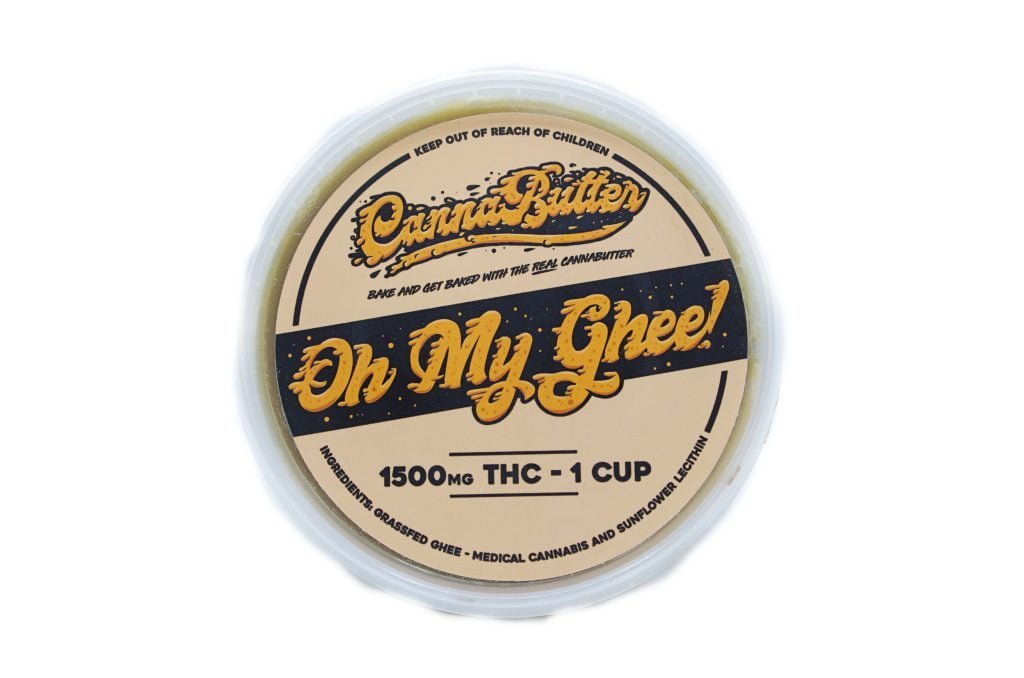
Buying removes all three. Ready made cannabutter arrives with a stated THC content, which makes the dosing math exact instead of approximate, and there is no decarb step and no smell. Our OMGhee cannabutter is a 1500 mg jar, and medicated coconut oil is the dairy free alternative for anyone baking without butter.
If you are weighing up which format suits what you are cooking, we compared the options in cannabutter and weed butter: what to buy for infused cooking.
Frequently Asked Questions
How much weed do you need for weed butter?
The standard ratio is 7 g of cannabis to 1 cup (227 g) of butter. Use 3.5 g for a milder batch or up to 14 g for a strong one. At 20% THC, 7 g produces roughly 862 mg of THC across the cup, which works out to about 18 mg per teaspoon.
How much weed per 100g of butter?
Around 3 g of cannabis per 100 g of butter, scaling from the standard 7 g to 227 g ratio. At 20% THC that gives roughly 370 mg of THC per 100 g of butter, or about 18 mg per teaspoon, since the ratio rather than the batch size sets the strength.
How do you make extremely potent cannabutter?
Increase the flower to butter ratio rather than extending the cook. Use 14 g or more per cup, start with a higher percentage flower, or substitute kief, which is far more concentrated by weight. Decarbing thoroughly matters more than infusing longer, because an incomplete decarb caps the ceiling no matter what else you do.
How long is too long to infuse cannabutter?
Past about four hours on direct heat you are getting very little extra potency and are losing terpenes and flavour. Two to three hours on the stovetop or four to six in a slow cooker is the useful range. A weak batch is almost always an incomplete decarb rather than a short infusion.
Can you make cannabutter without decarbing first?
You can, but it will be weak. Raw cannabis contains THCA rather than THC, and only a small amount converts at the low temperatures used for infusion. Decarbing at 110 C for 30 to 40 minutes beforehand is what makes the difference between a functional batch and a disappointing one.
How long does cannabutter last in the fridge?
Three to four weeks in an airtight container. Any water left in it shortens that, so separate the butter from the water fully before storing. If it smells sour or looks discoloured, discard it.
Can you freeze cannabutter?
Yes, and it holds up to six months frozen. Portion it into an ice cube tray first so you can take out a measured amount later. Wrap it well, since freezer burn and air exposure degrade cannabinoids faster than cold does.
What is the difference between cannabutter and cannabis coconut oil?
The method is the same and only the fat changes. Coconut oil has a higher saturated fat content, which some people find extracts slightly more efficiently, and it is dairy free and works in recipes where butter would not. Butter gives a better result in most baking. Flavour and diet usually decide it.
Ready to skip the afternoon? Browse edibles and baked goods, shipped across Canada in discreet packaging.